
We’d arrived by bus an hour ago and watched the monstrous video.
Footage of survivors; men who looked eighty, having been reduced to bone and cloth—yet the captions said they were thirty.
My heart was already full, yet our tour of Auschwitz had just begun.
A woman called our attention to the back of the theater.
She was in her sixties, wearing a no-nonsense brown dress and tight grey curls She could have been a librarian, though the subject of her study was narrower and far more grim.
She introduced herself as our tour guide and asked that we follow her, single-file, out of the theater and into the daylight.
~
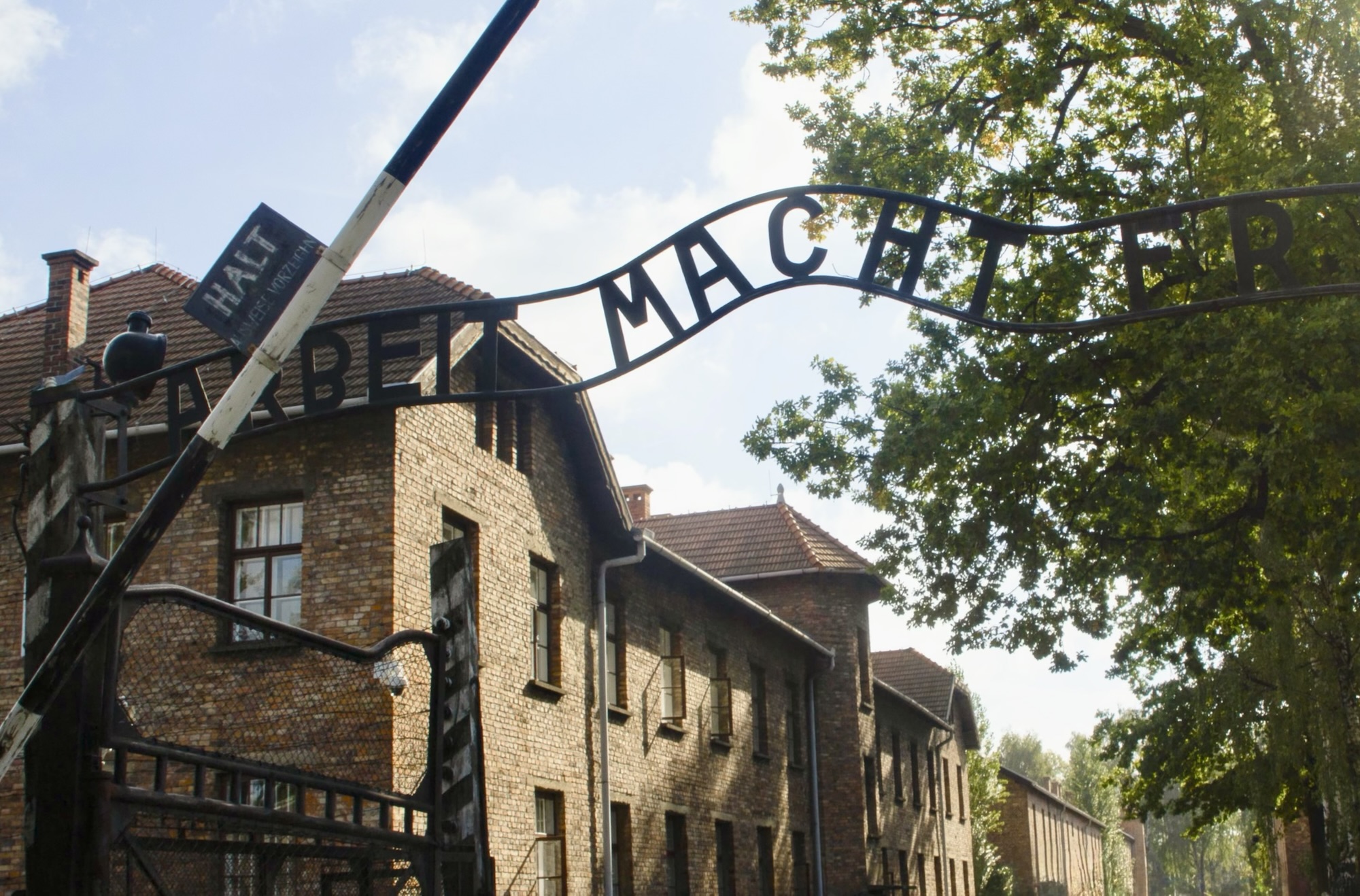
Our path began beneath the words twisted in iron letters above the gate.
WORK WIlL SET YOU FREE
It felt smaller in person—the letters thin and ordinary in a way that didn’t fit what it meant.
Beyond, sunlight filtered through the open windows.
Manicured lawns stood green and soft between the rough brick barracks.
Red geometric wainscoting stretched along the dirty cement walls.
I put my camera aside.
~
An hour later, we stared out the bus window in shock.
Row upon heart-sinking row of barracks and miles of barbed and electrified fences passed us.
Birkenau.
Off the bus, Dani and I wandered alone, following a line of train tracks into the camp.
The rails cut straight through, refusing to turn. No breaks. Just distance, once measured in souls, now measured by our footsteps.
To our sides, the camp reached outwards, with the jagged peaks of dilapidated barracks cascading across the swampy, flood-prone plains.
People dotted the paths, but they disappeared into the distance between the barracks.
At the end of the tracks we found our original guide, our tour, which we’d thought had concluded with the first camp continuing without us.
She pointed out attentions to a sandy square of land.
It looked innocent enough, yet she said it held the ashes of a million prisoners.
I couldn’t fathom.
~
Dani reached for me, and we stood together
Then we turned from the ashes and began the long walk back to the gates.